Professional and Middle Management Recruitment
Search for a Grain and Flour Supplier Development Manager
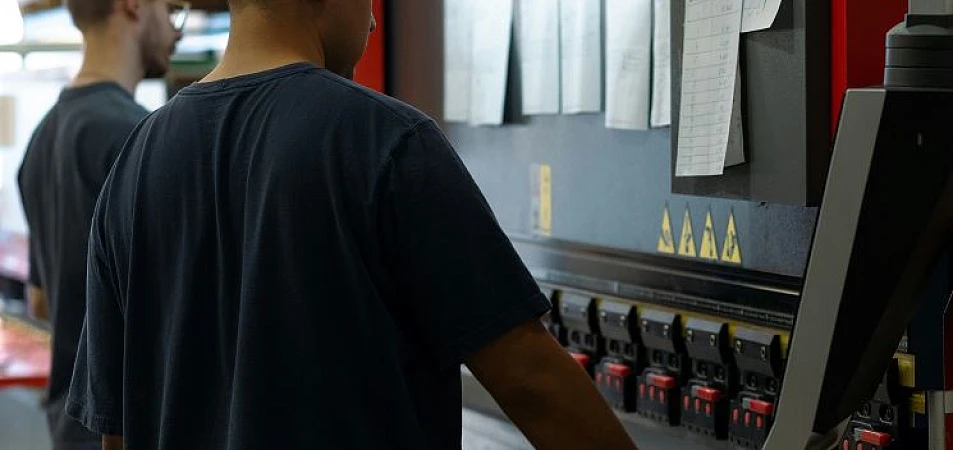
When a large manufacturing facility faces a shortage of qualified operators, even a minor disruption in shift staffing can bring a production line to a halt and result in multi‑million dollar losses.
This was exactly the situation our client found themselves in — one of the largest tobacco product manufacturers in Russia. Historically, the company had worked with several outsourcing providers, but one of them could no longer handle the staffing requests: work quality declined, KPIs were missed, and the labor market was experiencing acute talent shortages.
Following a tender process, we were selected as a backup provider and eventually became the key production outsourcing partner. Our objective was clear: rapidly deploy a team, ensure uninterrupted equipment operation, and prove that even amid labor shortages, high quality and safety standards can be maintained.
Tobacco manufacturing is a complex, high‑tech environment. In the filter making unit, errors are unacceptable — every line stoppage is recorded by the monitoring system, and every deviation affects product cost.
The client faced several challenges:
The client decided to change providers in order to stabilize the unit and regain control over quality.
We took on full production outsourcing for filter making operators. The work was performed on the client’s site in an on‑site format: our employees and operations managers were present at the facility daily, while part of the back office supported processes remotely.
We were responsible for:
All of this was done in full legal compliance: responsibilities were clearly separated under the service agreement, strictly within the boundaries of applicable laws.
To ensure a seamless launch, we deployed:
We understood that any mistakes during launch could risk halting production lines — which was unacceptable. Therefore, we developed a phased transition plan.
1. Documentation review and knowledge transfer
The client provided us with the complete set of work instructions. Shift supervisors and team leaders underwent training and subsequent hands‑on equipment practice.
2. Training and site authorization for personnel
Each employee was authorized to work only after completing training, safety briefings, knowledge assessments, and on‑the‑job training under the supervision of mentors.
3. Integration into the production system
Our employees worked within the client’s digital system, covering:
4. Ongoing communication and control
We established multi‑level reporting:
The main challenge was that fewer employees transferred from the previous contractor than expected. As a result, we had to rapidly scale up recruiting and accelerate training.
Solution: increase recruiting capacity, restructure the training schedules, and reallocate resources to the most critical bottlenecks.
To ensure stability, we applied a comprehensive approach:
The result — zero critical incidents in the unit throughout the entire partnership.
Within the first month:
During the first year:
Client feedback
The client’s management and project coordinators gave high praise to our work, noting discipline, speed of launch, and communication quality.
Additional outcome
Impressed with the results, the client expanded the partnership — we also became the operator for warehouse processes at their site.
What worked particularly well:
Challenges and how we overcame them:
Key insights:
- launching complex production outsourcing requires significant time and resource buffers
- detailed advance preparation reduces risks to nearly zero
- it is essential to build in contingency scenarios
This project demonstrated that even in high‑intensity production environments with stringent quality and safety requirements, it is possible to build a stable outsourcing model that delivers tangible results within just a few months.
We did not simply fill a staffing gap — we gave the client predictability, transparency, and process controllability. In the long term, this model remains sustainable: KPIs are stable, quality is high, and the client’s trust is confirmed by the expansion of our partnership.